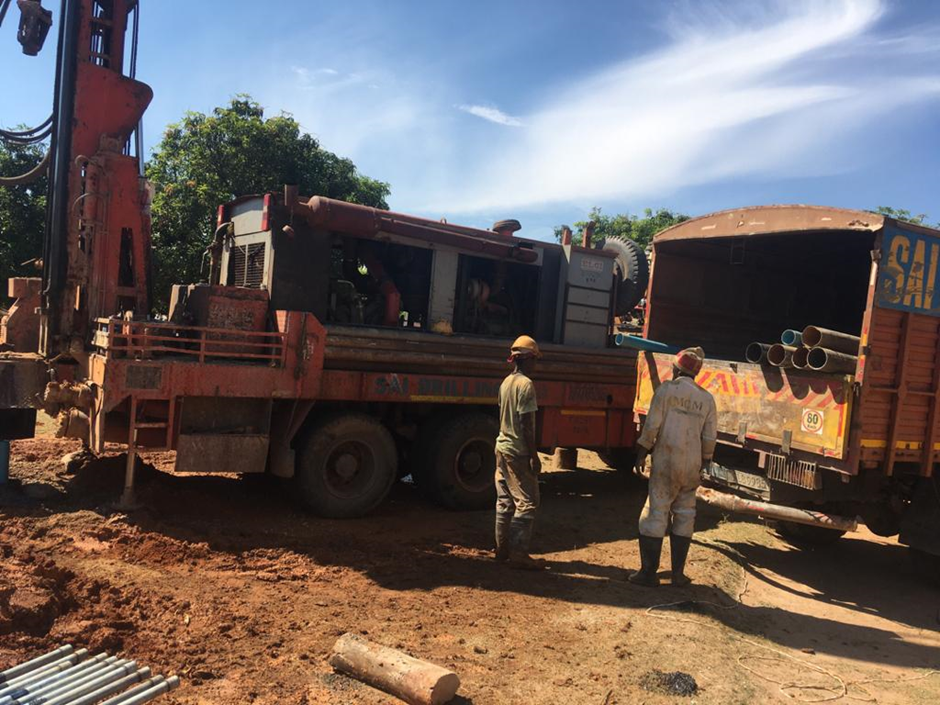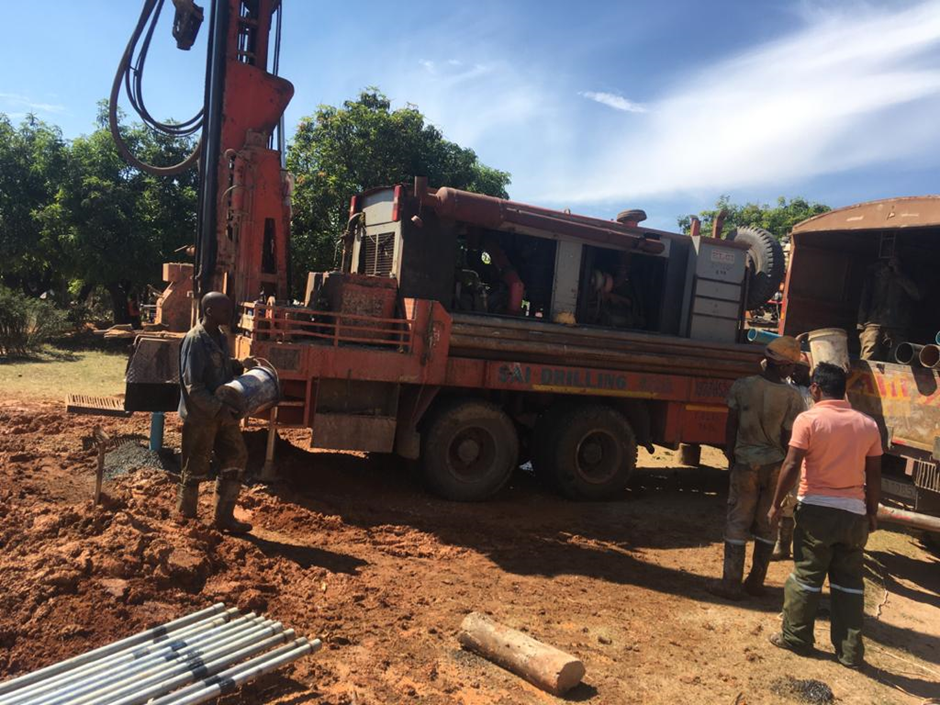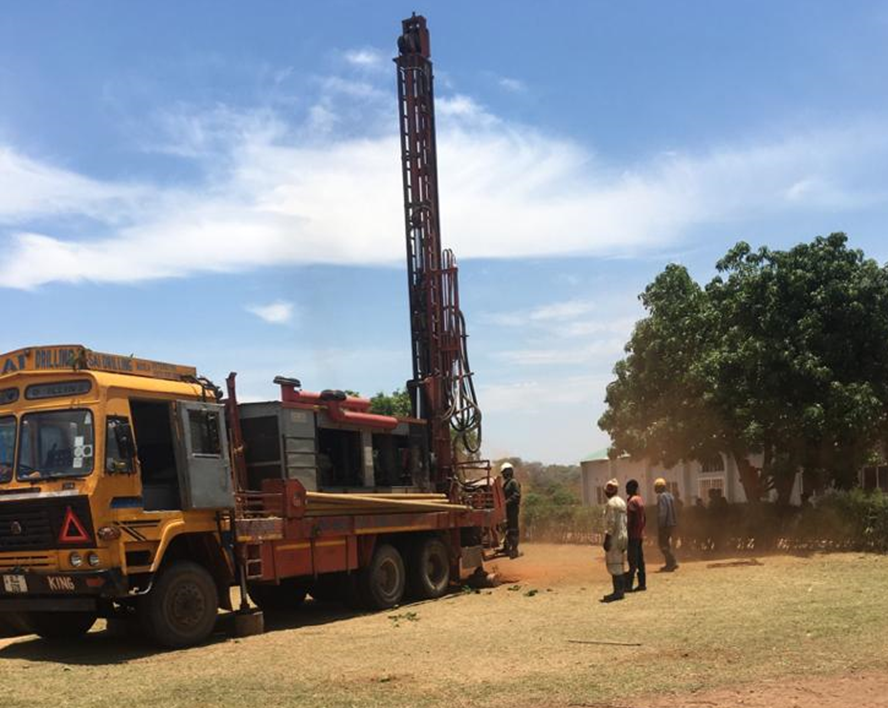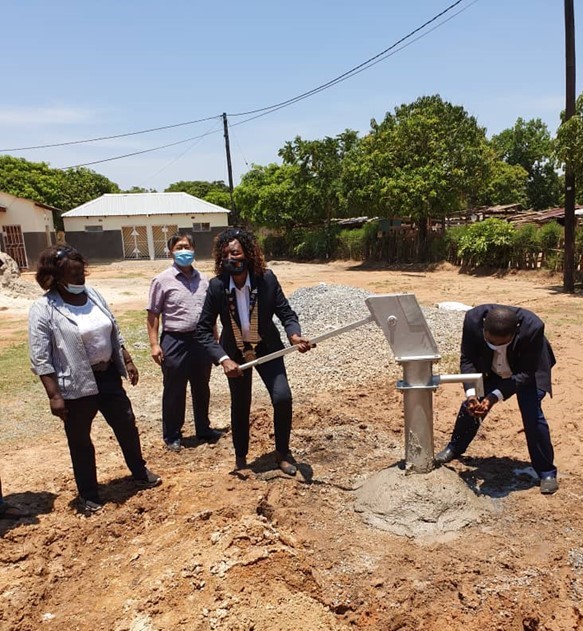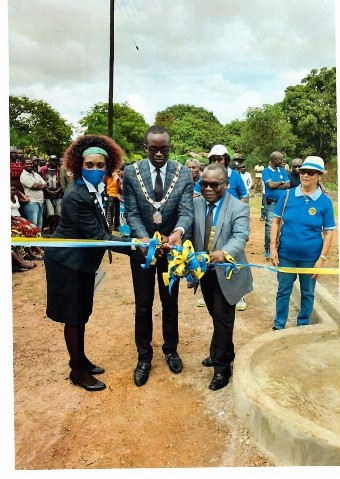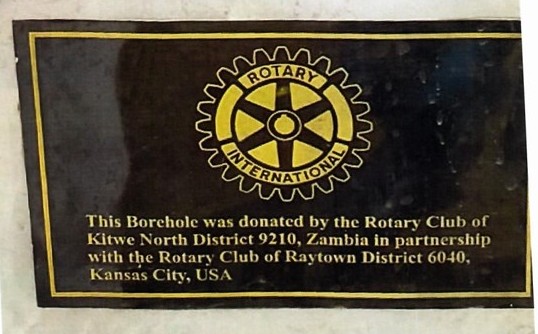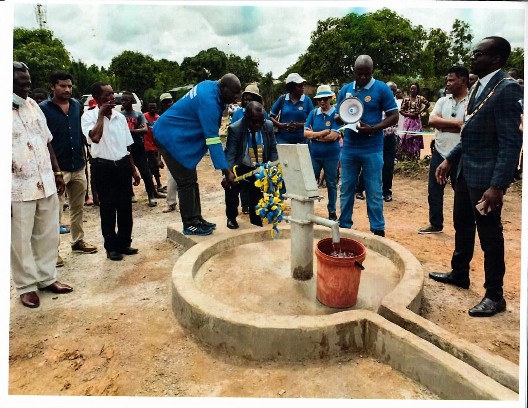
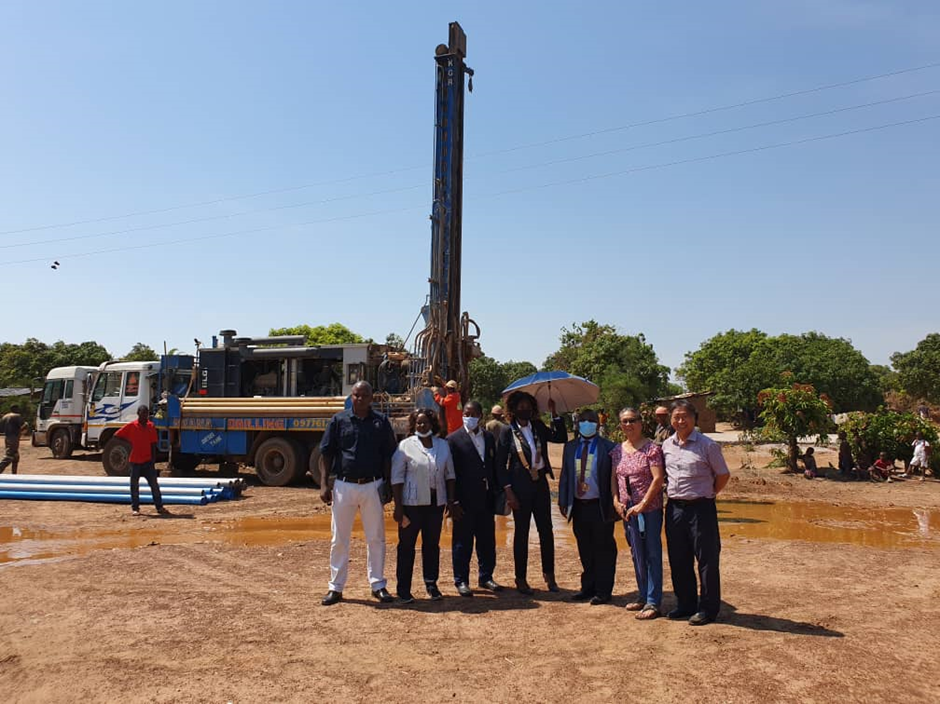
 The Raytown Rotary Club and the Kitwe North Rotary Club partnered on a Global Grant to provide 15 boreholes in four communities outside Kitwe, Zambia. The award was in the amount of $40,001.00. This was the first Rotary Global Grant that Raytown Rotary has ever participated in. The project was to provide clean water and sanitation to 4 rural communities. This also closely follows Rotary’s effort to eradicate polio.
The project was to provide clean water and sanitation to four rural communities. This also closely follows Rotary’s effort to eradicate polio. Collectively, these settlements have a population of approximately 15,000. The provision of clean water was nonexistent. They relied on shallow wells, which were prone to waterborne diseases.
This project addresses two major community needs:
- Provision of clean water and sanitation.
- Prevention of waterborne diseases.
It is doing so by trying to meet these three goals:
 Facilitating universal and equitable access to safe and affordable drinking water.
- Improving water quality by protecting and maintaining surface- and groundwater resources, reducing pollution and contaminants, and promoting wastewater reuse.
- Improving community hygiene knowledge, behaviors, and practices that help prevent the spread of disease.
Budget items, including equipment and labor, were purchased from local vendors in Zambia. Now that the project is completed, each community owns the equipment through its Community Development Committee. Local funding sources have been found to sustain project outcomes for the long term. The project has been completed, and at least 15,000 people have benefited from this project. Final accounting for the project resulted in a savings of approximately $12,000 resulting from drilling companies not charging for the design and consulting so that they could make contributions to their communities. Also, the Zambia Broadcasting Company provided PR at no additional charges, and there was a monetary depression in Zambia. Any remaining funds are generally returned to the Rotary Foundation, but they instead allowed the construction of 6 additional boreholes in communities originally covered by the Grant.